What FY26 Actually Demands from HR and Marketing Leaders
The gap between companies whose employees are visible online and those that are not is no longer a content strategy problem — it is a trust problem. Here is what FY26 specifically demands from HR and marketing leaders, and why starting in April matters.
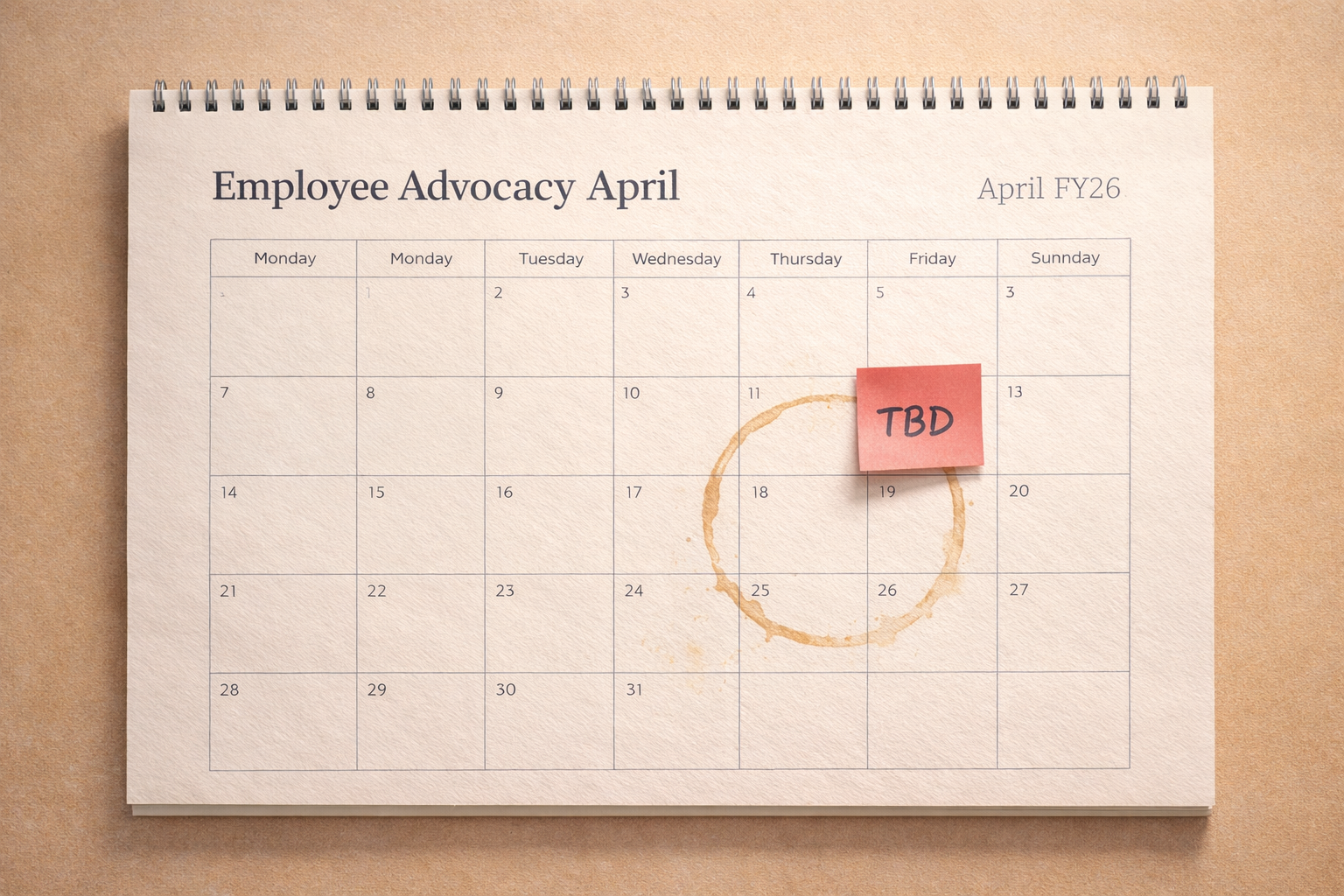
Every financial year begins the same way. New targets get set. New budgets get approved. New initiatives get announced in all-hands meetings. And then, quietly, most companies spend the next twelve months executing the same playbook they used the year before.
FY26 will be different for one specific reason. The gap between companies whose employees are visible online and companies whose employees are not is no longer a content strategy problem. It is a trust problem. And trust, once lost to a competitor, does not come back easily.
This is the year HR and marketing leaders need to answer a question they have been deferring: What is our strategy for making our people visible, and what is it costing us not to have one yet?
What Changed Going Into FY26
The shift did not happen overnight, but its consequences are landing now.
Buyers in Fintech, Traveltech, MediaTech, and B2B SaaS are conducting more research before agreeing to meetings than at any point in the last decade. They are not just reading your website or reviewing your case studies. They are looking at your team. They are asking whether the people at your company know what they are talking about, whether they are present in industry conversations, and whether working there seems worth it to people who are already there.
At the same time, talent acquisition has become a visibility competition. The best candidates in any market are not actively searching job boards. They are forming opinions about companies based on what they see from employees in their feed over weeks and months before a role ever gets posted.
Company pages cannot solve either of these problems. Organic reach on brand pages has declined structurally across every major platform. The content that reaches buyers and candidates today comes from people, not logos.
HR and marketing leaders who entered FY25 waiting to formalise an employee advocacy strategy are entering FY26 with a visibility deficit that compounds every quarter.
What FY26 Specifically Demands
The new financial year creates a specific set of pressures that make this the right moment to act, not a future quarter.
Budgets are live and decisions are being made now. Every initiative that does not get funded in the first 60 days of a financial year typically waits until Q3 or gets cut entirely. The window to allocate budget toward employee advocacy and see results within the same financial year is open right now and will not stay open.
FY26 targets require new inputs. If your hiring targets, pipeline targets, or brand visibility targets have increased from last year, pursuing them with the same channels you used last year is a structural mismatch. Employee advocacy is not an incremental improvement to your existing playbook. It is a new input that produces outputs your current channels cannot.
Your competitors are not waiting. The companies in your sector that formalise employee advocacy in April will have three months of compounding reach, credibility, and trust built before mid-year reviews. The companies that wait until Q2 or Q3 will spend the rest of the year catching up to a baseline their competitors set while they were still planning.
What HR Leaders Specifically Need to Address
For CHROs and TA leaders, FY26 demands a direct answer to the employer brand question.
Your Glassdoor page and your careers website are destinations. Candidates have to decide to visit them. Employee advocacy is ambient. It reaches candidates in their feed before they are actively looking, building familiarity and trust at a stage of the decision-making process you currently have no presence in.
The companies attracting the strongest candidates in your sector are not necessarily the ones with the best compensation packages or the most polished careers pages. They are the ones whose employees make working there look worth wanting, consistently and publicly.

The employer brand conversation is already happening — the question is whether your people are in it.
FY26 demands that you stop treating employer brand as a destination strategy and start treating it as a presence strategy. The difference is whether your people are visible in the right feeds before a candidate ever decides to look you up.
What Marketing Leaders Specifically Need to Address
For CMOs and growth leaders, FY26 demands a direct answer to the trust and reach question.
Paid reach is getting more expensive and less effective. Organic reach on brand pages is structurally limited. The one channel that has not declined is the personal networks of your employees, and most companies have never activated it deliberately.
The math is straightforward. If you have 300 employees and each has an average network of 500 connections, your potential organic reach through employee advocacy is 150,000 people. Your company page following is unlikely to come close to that number, and the engagement rate on employee-shared content is consistently higher than brand-page content because the trust transfer is personal.
The marketing question FY26 demands you answer is not whether employee advocacy works. The data settled that. The question is whether your team has the structure, the content support, and the platform to make it happen without adding significant workload to an already stretched function.
The Practical Starting Point
The most common reason employee advocacy programs do not start is not budget or belief. It is the absence of a clear starting point. Most HR and marketing leaders know they should be doing this. They do not know what the first 90 days actually looks like.
A structured start covers four things:
The first is platform setup. Employees need a single place where approved content lives and sharing takes one action, not five. Friction is the most reliable predictor of non-participation.
The second is leadership modelling. Advocacy programs that start with middle management before leadership is visibly participating almost always stall. If the CHRO or CMO is not posting, the signal to the rest of the organisation is that this is optional.
The third is content that serves the employee, not just the brand. Employees will share content that makes them look knowledgeable and credible to their own networks. They will not share content that makes them look like a corporate mouthpiece. The 70/30 principle applies: 70% of content in the program should serve the employee's personal brand, 30% should serve the company's objectives.
The fourth is measurement that connects to business outcomes, not vanity metrics. Participation rates, reach amplification, talent pipeline influence, and content-attributed leads are the numbers that make the program defensible in a budget conversation. Likes and shares are not.
Why Starting in April Matters
The companies that start in April and run a structured 90-day program will have real data by the end of June. That data does two things. It justifies continued investment for the rest of FY26. And it creates a compounding advantage that companies starting in Q3 cannot replicate within the same financial year.
Employee advocacy is not a campaign. It is a capability. Capabilities take time to build and time to compound. The earlier in the financial year you start building it, the more of that compounding happens within FY26 rather than being deferred to FY27.
FY26 demands that HR and marketing leaders stop treating employee advocacy as a future initiative and start treating it as a current priority. The window to start well is open now.
SocialRipple is onboarding 10 founding clients for the FY26 Founding Program before April 30th. 90 days, fully managed onboarding, LinkedIn content creation for your leadership team, and 8 hours per month of direct employer advocacy consultation — INR 15,000/month* for the first three months.